- Dividend Brief
- Posts
- The Deal That Could Redefine What Sits in Your Kitchen
The Deal That Could Redefine What Sits in Your Kitchen
A blockbuster food merger is bringing together some of the world’s most recognizable brands, creating a global powerhouse with the scale to reshape everyday consumer staples.

Noah Zelvis
April 01, 2026
Some deals add growth. This one could change the entire recipe for how a global food giant makes money. Hungry for more? Read on for all the details.

Gold Focus (Sponsored)
Experienced investors don’t wait for problems—they prepare before they arrive.
Right now, warning signs are clear: rising national debt, persistent inflation, and a financial system reliant on constant intervention.
History shows that combination slowly erodes purchasing power, year after year.
Gold has remained relevant for centuries because it isn’t tied to policy, confidence, or anyone else’s liability.
It simply holds value when currencies lose purchasing power.
More retirement savers are turning to physical gold through self-directed IRAs to protect their wealth.
Priority Gold’s FREE Kit explains how it works, IRS-approved structures, and how to safeguard your savings.
Click here to get your free guide
Entertainment
Disney Just Opened the Gates for Half the Day and Called It a Strategy
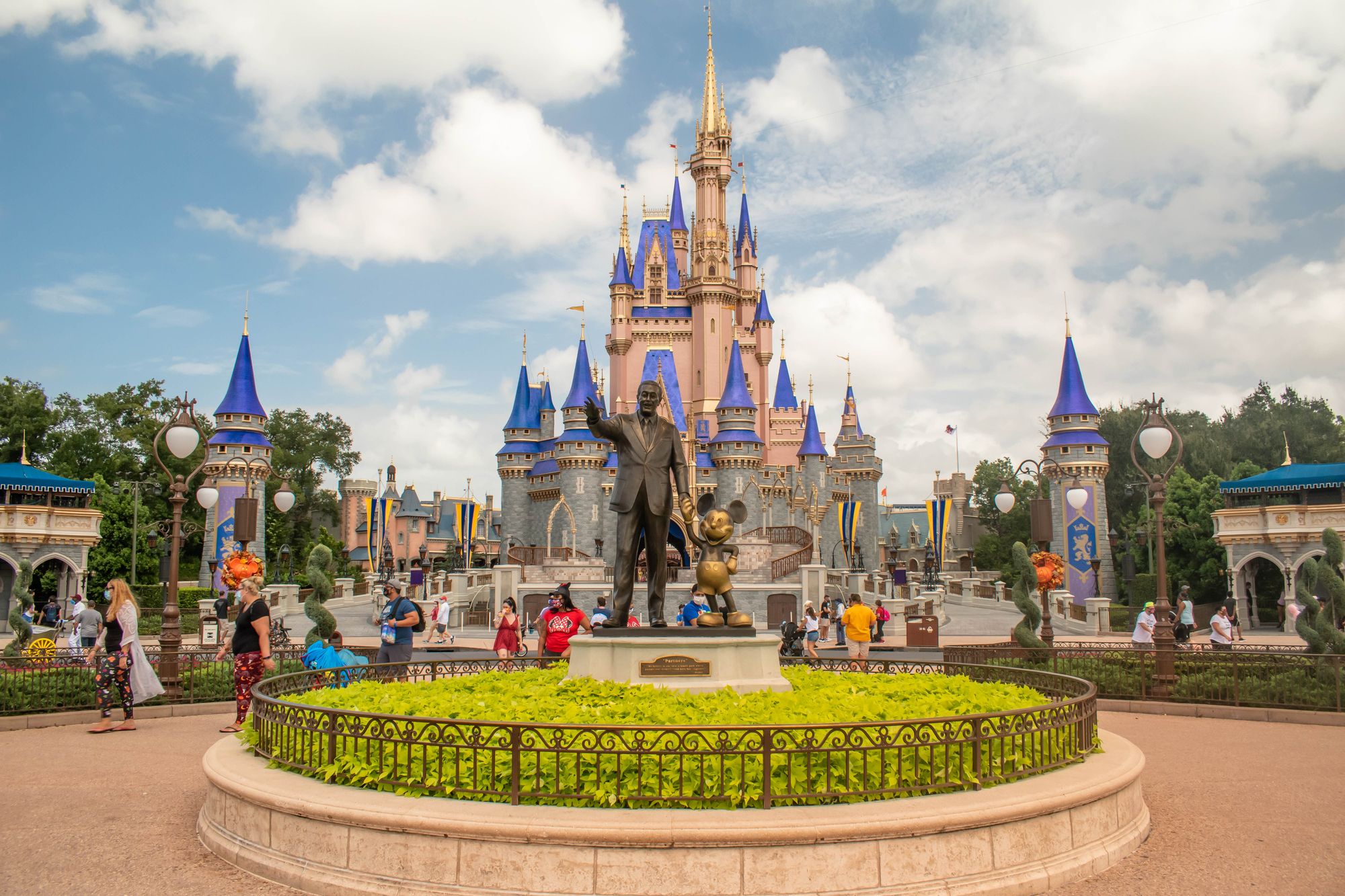
The Walt Disney Company's (NYSE: DIS) Walt Disney World just launched a new ticket option that lets guests enter any of its four theme parks after 2 PM during summer 2026.
Two-day and three-day options are available—no reservations required. The offer runs from late May through the end of July.
On the surface, this is a simple discount. Underneath it reveals something much more interesting about where Disney's parks business is heading.
The Parks Are Not Full Enough in the Afternoons
Theme parks make money when people are inside spending on food, merchandise, and experiences.
If attendance drops off after the morning rush, Disney loses revenue on infrastructure that is already running. This ticket fills that gap by pulling in a second wave of guests during the hours that need it most.
You do not create an entirely new ticket category unless the data shows a problem worth solving. Disney clearly saw empty capacity in the back half of the day.
Accessibility Without Slashing the Main Product
Disney has faced growing criticism that its parks have become too expensive for average families.
Instead of cutting headline prices, the company created a separate product that offers a more affordable entry point without devaluing the full-day experience.
You notice Disney quietly experimenting with simplicity after years of adding layers, and it feels like a company learning that sometimes less friction means more revenue.
DIS currently trades at $97 and pays a dividend of $1.50 per share, a yield of 1.54%.
Financial Services
The Biggest Bank in America Wants to Fix the American Dream
JPMorgan Chase (NYSE: JPM) just announced the American Dream Initiative, a multi-year program targeting small business growth, affordable housing, financial education, job training, healthcare access, and support for local institutions across the country.
The first goal is to expand support to 10 million small businesses, up from the 7 million served today.
Small Business Is the Entry Point
Ten million small businesses are an enormous number. Every one of them needs a bank account, a credit line, payment processing, and financial advice.
JPMorgan is not just offering charity. Building relationships with the exact customer base fuels long-term deposit growth and lending revenue.
You do not commit to serving 10 million small businesses solely out of goodwill. That is a customer acquisition strategy disguised as a community initiative.
Banking on the American Dream
Housing, healthcare, jobs, education, local institutions, and entrepreneurship. JPMorgan is positioning itself across every area where Americans feel the most financial pressure.
Each one creates a touchpoint where the bank becomes relevant in someone's daily life.
The genius is in the breadth. When your bank helps with the mortgage, the business loan, the job training, and the financial education, leaving becomes almost unthinkable.
JPMorgan chose to invest in the foundational needs of everyday Americans. Whether that is idealism or strategy depends on how cynical you are feeling.
Either way, the bank just made itself harder to compete with in the communities that matter most.
JPM currently trades at $296 and pays a dividend of $6.00 per share, a yield of 2.02%.
Market Shift (Sponsored)
Rising geopolitical tensions have pushed oil sharply higher — and renewed focus on energy equities.
For investors, the key question is which companies could thrive if prices remain elevated.
Zacks’ latest report reviews three oil stocks worth attention in this environment.
[Access the report]
Retail
The Company Built on Trust Is Now Being Questioned on Pricing
Costco Wholesale (NASDAQ: COST) is facing a lawsuit over how it handled tariffs, and this is not just another legal headline. It goes straight to the heart of what makes Costco work.
Customers claim Costco raised prices during the tariff period, then planned to keep the government refunds rather than give that money back.
Instead, the company said it would lower prices in the future. On paper, that sounds reasonable. In reality, it changes the relationship.
This Is About Trust, Not Just Prices
Costco's entire model is built on one simple idea: keeping margins low and passing savings to members. That is why people pay the membership fee in the first place.
If customers feel they paid more and didn't get that money back, the perception shifts quickly.
You are not just shopping at Costco for deals; you are buying into the idea that the company is on your side. That idea is now being tested.
Why This Matters More Than It Looks
This is not about flowers or cookware prices. It is about whether Costco can maintain the trust that underpins its entire model.
You can see the risk clearly. Costco is trying to manage pricing smartly, but it may have underestimated how sensitive its customers are to anything that feels even slightly unfair.
COST currently trades at $993 and pays a dividend of $5.20 per share, a yield of 0.52%.
Dividend Stocks Worth Watching
Delta Air Lines, Inc. (NYSE: DAL) is upgrading its in-flight experience by partnering with Amazon's low-Earth-orbit satellite network to bring faster, high-bandwidth Wi-Fi to hundreds of aircraft starting in 2028.
The move is part of a broader push across the airline industry to turn connectivity into a competitive advantage.
Faster internet not only improves the passenger experience but also opens the door to new revenue streams, from onboard shopping to personalized content and advertising.
Delta plans to roll out the service across key domestic aircraft first, building on its existing Wi-Fi partnerships while positioning itself at the forefront of the next generation of in-flight technology.
With passenger expectations rising, connectivity is quickly becoming as important as comfort and pricing.
For investors, this is about monetizing the journey itself.
If Delta can successfully layer digital services and commerce onto its flights, it could unlock incremental revenue while strengthening customer loyalty, supporting longer-term growth, and cash flow stability.
DAL pays a 19-cent dividend, with a 1.10% yield.
McCormick & Company, Inc. (NYSE: MKC) is making a bold move to reshape its future, agreeing to acquire the majority of Unilever’s food business in a deal that would create a global powerhouse across condiments, seasonings, and everyday staples.
The transaction brings together iconic brands like Hellmann's, Knorr, and Marmite with McCormick's existing portfolio, significantly expanding its reach into high-volume, high-frequency food categories.
It is a scale play at its core, designed to boost sales, deepen category dominance, and strengthen its position in kitchens worldwide.
For Unilever, the move continues a broader shift away from food toward faster-growing personal care segments.
For McCormick, it is a long-considered strategic leap, one that could accelerate growth but also comes with integration complexity and execution risk, especially given the size of the deal and the mixed track record of similar mergers in the sector.
For dividend investors, this is a high-stakes opportunity.
If McCormick can successfully integrate the portfolio and unlock synergies, the expanded scale and pricing power could support stronger, more resilient cash flows.
But in the near term, the deal introduces uncertainty, making this a story to watch closely as it unfolds. MCK pays a 48-cent dividend, yielding 3.88%.
The Hershey Company (NYSE: HSY) is laying out its next chapter of growth, positioning itself to lead what it calls the “next generation of snacking” as it looks to evolve beyond its traditional confectionery roots.
At its Investor Day, the company outlined a strategy to expand into faster-growing categories such as salty snacks and better-for-you options, while continuing to leverage the strength of its iconic chocolate brands.
A key part of the plan is a more unified go-to-market approach that brings its sweet, salty, and functional offerings together under one integrated platform.
Behind the scenes, Hershey is also focusing on efficiency.
Investments in automation, AI, and a more modern supply chain are aimed at improving productivity and helping restore margins, creating room for reinvestment and sustained earnings growth.
For investors, this is about staying relevant in a changing consumer landscape.
If Hershey can successfully broaden its portfolio while protecting the strength of its core brands, it could unlock a more balanced growth profile and support the consistent cash flows that underpin its long-term dividend story.
HSY pays a $1.45 dividend, yielding 2.84%.
Dividend Increases
JILL has increased its dividend to 9 cents, up 12.50%. Its new yield is 3.19%.
TJX has raised its dividend to 48 cents, a boost of 12.94%. Its new yield is 1.23%.
BKU has lifted its dividend to 33 cents, an increase of 6.45%. Its new yield is 2.94%.
WSO has boosted its dividend to $3.30, a rise of 10.00%. Its new yield is 3.63%.
TYBT has increased its dividend to $1.03, up 3.00%. Its new yield is 2.14%.
New Income (Sponsored)
His official salary? $400,000 a year.
But his tax returns reveal something unexpected:
Up to $250,000 per month from a single source.
It’s not real estate.
It’s not stocks.
So what is it — and why are more investors paying attention now?
Discover how you could get started for under $20
Poll: What’s the hardest thing to stay consistent with? |
Upcoming Dividend Payers
IRM’s ex-dividend date for the forthcoming 86-cent payment is 04/03/26.
RCL’s ex-dividend date for the forthcoming $1.50 payment is 04/03/26.
MYE’s ex-dividend date for the forthcoming 13-cent payment is 04/03/26.
HRB’s ex-dividend date for the forthcoming 42-cent payment is 04/06/26.
OLP’s ex-dividend date for the forthcoming 45-cent payment is 04/06/26.
Everything Else
Oracle says it will cut thousands of jobs as it tries to balance out the huge capital investment required to build out its AI infrastructure.
Visa is rolling out six new AI-based tools to modernize the chargeback process. It says the number of disputes has risen by 35% since 2019.
Nike stock fell to an 11-year low this morning after a pessimistic sales forecast, which pointed to a subdued outlook in China and a decline in retail and store sales elsewhere.
Eli Lilly & Co.’s weight-loss pill has secured US FDA approval, clearing the way for it to go into direct competition with Novo Nordisk, which was approved back in December.
That’s all for today’s edition of the Dividend Brief.
Thanks for reading, and if you have any feedback or dividend stocks you want me to take a look at, just reply to this email!
—Noah Zelvis
DividendBrief.com